Washer and Appliance Leak Cleanup in North Port, FL
A washer hose that bursts mid-cycle, a dishwasher that leaks under the cabinets, a refrigerator ice maker line that drips for weeks: each one puts water under flooring and cabinets where it cannot be seen. The mitigation team finds it and dries it.
(888) 621-2041Appliance leak? Start the dry-out- Under-cabinet drying
- Moisture mapping
- Gray water handled
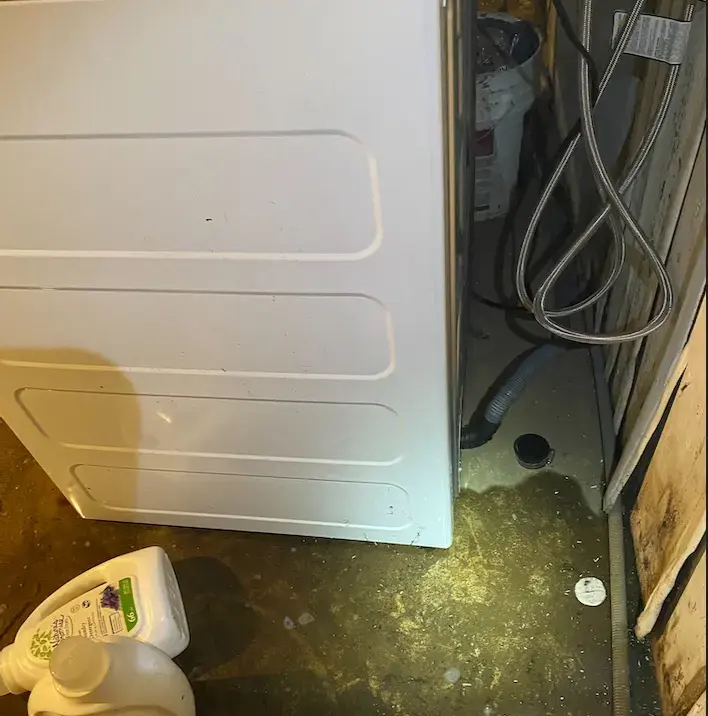
What to do the moment you find a washer or appliance leak
- 1
Shut the appliance valve
Washer valves are behind the machine; dishwasher and fridge valves are under the sink.
- 2
Unplug the appliance
Only if the plug and outlet are dry and easy to reach.
- 3
Towel up the water
Soak up what you can and open cabinet doors to let air in.
- 4
Photograph the source
The failed hose or fitting and the wet flooring and cabinets.
What does washer and appliance leak cleanup cost in North Port, FL?
In North Port, FL, washer and appliance leak cleanup typically runs $500 to $2,500 when the water stayed in a laundry room or a small kitchen area, and $2,500 to $7,000 when it ran under cabinets and flooring into other rooms. Gray water from a washer drain or a long, slow ice maker leak adds cost.
Laundry or small area
$500 to $2,500
- Caught quickly
- Tile or vinyl
- Dried in place
Kitchen under cabinets
$2,500 to $5,000
- Toe kicks off
- Cabinet bases dried
- Flooring checked
Several rooms
$4,000 to $7,000+
- Floating floor lifted
- Gray water cleaning
- Longer drying log
For a planning number on your own loss, try the water damage cost calculator. The final figure comes from the on-site walkthrough and the moisture map.
How washer and appliance leak cleanup is handled in North Port
Find the edges
Meters under cabinets and flooring show how far the water traveled.
Extract
Water comes out of carpet, from under floating floors and from cabinet bases.
Dry in place
Toe kicks come off and air and dehumidifiers dry under the cabinets and floor.
Verify
Daily readings until the goal is met, then the file goes to the adjuster.
Appliance leaks are one of the most common water losses in newer North Port homes, where laundry rooms sit next to the kitchen or off the garage and most floors are tile or floating vinyl plank.
The usual culprits
- Rubber washer fill hoses that crack or burst under pressure.
- Washer drain hoses that pop out of the standpipe mid-cycle.
- Dishwasher supply lines and door seals that leak under the cabinets.
- Refrigerator ice maker lines that drip slowly behind the fridge.
Why appliance water hides
Water under a floating floor or a cabinet base does not dry on its own. It sits against the slab and the particleboard cabinet bottoms, which swell and delaminate. The tech who does the walkthrough uses meters under the cabinets and along the flooring to find how far the water went, often much further than the puddle suggested.
Clean water or gray water
Water from a supply hose is Category 1. Water from a washer drain or dishwasher discharge is Category 2 gray water, and the materials it touched are cleaned and sometimes removed. A slow leak that ran for weeks can also move toward Category 2. For toilets, see toilet overflow cleanup.
Saving cabinets and flooring
Toe kicks come off so air can reach under the cabinets, and specialized drying pushes air into the cabinet bases. Floating floors may be lifted to dry the slab. Most appliance losses dry in three to five days. For the equipment and drying goal, see structural drying. The Consumer Product Safety Commission lists appliance recalls, and the EPA WaterSense program covers efficient washers and leak checks.
Washer & Appliance Leaks questions
How often should washer hoses be replaced?
Rubber hoses every five years or so. Braided stainless hoses last longer and fail less often.
Can kitchen cabinets be saved after a leak?
Often, if the water is found and dried quickly. Particleboard bases that swell or delaminate may need replacing.
Is washing machine water clean?
Fill water is clean. Drain water is Category 2 gray water and is handled with cleaning and sometimes removal.
Why is the floor wet in the next room?
Water travels under floating floors and baseboards along the slab, so it often shows up away from the appliance.
How long does drying take?
Usually three to five days, longer if water got under cabinets or a floating floor.
Is an appliance leak covered?
Sudden leaks are commonly covered, while slow, long-running leaks may not be. Coverage depends on your policy, so it is worth checking with your own insurer.
Related water damage services in North Port
Covering North Port and nearby Sarasota and Charlotte County
The North Port restoration crew works every ZIP from 34286 to 34291, from Wellen Park to Toledo Blade Boulevard, plus Port Charlotte, Murdock, El Jobean, South Venice, Venice, Englewood.
See every North Port area coveredWasher or dishwasher flooded the floor?
Water under cabinets and floating floors stays hidden. Mapping and drying it now saves the cabinets and flooring.