Structural Drying in North Port, FL
A room can look dry long before it is. Concrete block, a slab and the bottom of the drywall hold water well after the surface feels fine, and Florida humidity slows everything down. The drying team dries the structure, not just the surface, and pulls the equipment only when the readings say dry.
(888) 621-2041Get the structure dried to standard- IICRC S500 drying standard
- LGR dehumidification
- Daily moisture readings
What to do the moment you find wet walls, slab or framing
- 1
Stop the water source
Nothing dries while water keeps coming.
- 2
Get the standing water out
Extraction first. See water extraction.
- 3
Close windows and doors
Humid outside air slows drying in Florida. Let the dehumidifiers work.
- 4
Leave the equipment running
Turning it off at night adds days to the job.
What does structural drying cost in North Port, FL?
In North Port, FL, structural drying typically runs $1,000 to $3,500 for one or two rooms over three to five days, and $3,500 to $9,000 for a larger area or dense materials like block and a thick slab. The class of the loss, the number of rooms and how many days the equipment runs set the cost.
One or two rooms
$1,000 to $3,500
- Class 1 to 2
- Three to five days
- A few air movers
Larger area
$3,500 to $6,500
- Several rooms
- More dehumidifiers
- Walls and floors
Dense or saturated
$5,500 to $9,000+
- Block and slab
- Desiccant or heat drying
- Longer log
For a planning number on your own loss, try the water damage cost calculator. The final figure comes from the on-site walkthrough and the moisture map.
How structural drying is handled in North Port
Map the moisture
Meters and thermal imaging record every wet material and a dry reference in the same house.
Set the equipment
Air movers and LGR dehumidifiers sized to each room's evaporation load, desiccants for dense materials.
Read daily
Temperature, humidity and material readings every day, adjusting equipment as materials dry.
Verify dry
Equipment leaves when materials reach the goal, and the log goes into the file.
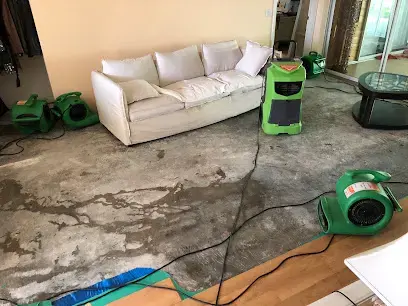
Structural drying is the part of water damage restoration that decides whether the job is really finished. In North Port, with concrete block walls, slab floors and humid air most of the year, it takes more than a fan and an open window.
IICRC S500 is the industry drying standard
The IICRC S500 standard sets how water damage is assessed and dried: identify the category of water, classify the loss, map the moisture, dry with the right equipment and verify the result. Category 1, 2 and 3 water are handled differently, and Class 1 through 4 sets how much equipment a room needs. Class 4 means dense materials like concrete, block and hardwood that give up water slowly.
The equipment and why it matters
- Air movers push air across wet surfaces to speed evaporation, set to each room's load.
- LGR dehumidifiers pull that moisture back out of the air, even as the air gets drier.
- Desiccant dehumidifiers work on dense materials and in cooler spaces.
- Thermal imaging and pinless meters find water behind walls and under floors.
The drying goal
Drying is measured, not guessed. The tech takes readings on a dry reference material in an unaffected part of the same house, then dries the wet materials until they read within 2 to 4 points of that reference. Readings are logged daily in the drying log, along with temperature and humidity. A contained Class 1 loss usually dries in three to five days. Block, slab and hardwood take longer, and the equipment stays until the readings say dry.
Why surface-dry is not enough
Closing up a wall or laying new flooring over a damp slab traps the water. Within 24 to 48 hours wet materials can start growing mold, and flooring laid on a wet slab can cup or come loose. For how water gets removed first, see water extraction. The EPA indoor air quality pages explain humidity in the home, and UF/IFAS Extension covers humidity in Florida homes.
Structural Drying questions
What is IICRC S500?
It is the industry standard for water damage restoration. It covers how losses are categorized, classified, dried and verified.
How long does structural drying take?
A contained Class 1 loss usually takes three to five days. Block walls, slab and hardwood take longer.
Why not just open the windows?
Florida air is humid most of the year. Opening windows often slows drying. Closed rooms with dehumidifiers dry faster.
What is a dry reference reading?
A moisture reading on the same material in an unaffected part of the house. Wet materials are dried to within 2 to 4 points of it.
Can I turn the equipment off at night?
It is best not to. Drying depends on steady airflow and dehumidification, and stopping it adds days.
Why is the equipment so loud?
Air movers move a lot of air to speed evaporation. The noise is temporary, and it shortens the job.
Related water damage services in North Port
Covering North Port and nearby Sarasota and Charlotte County
The North Port restoration crew works every ZIP from 34286 to 34291, from Wellen Park to Toledo Blade Boulevard, plus Port Charlotte, Murdock, El Jobean, South Venice, Venice, Englewood.
See every North Port area coveredStill damp after the water is gone?
Surface-dry is not dry. Block, slab and framing need real drying, measured every day, before anything gets closed up.